|
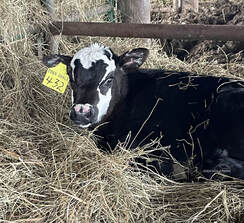
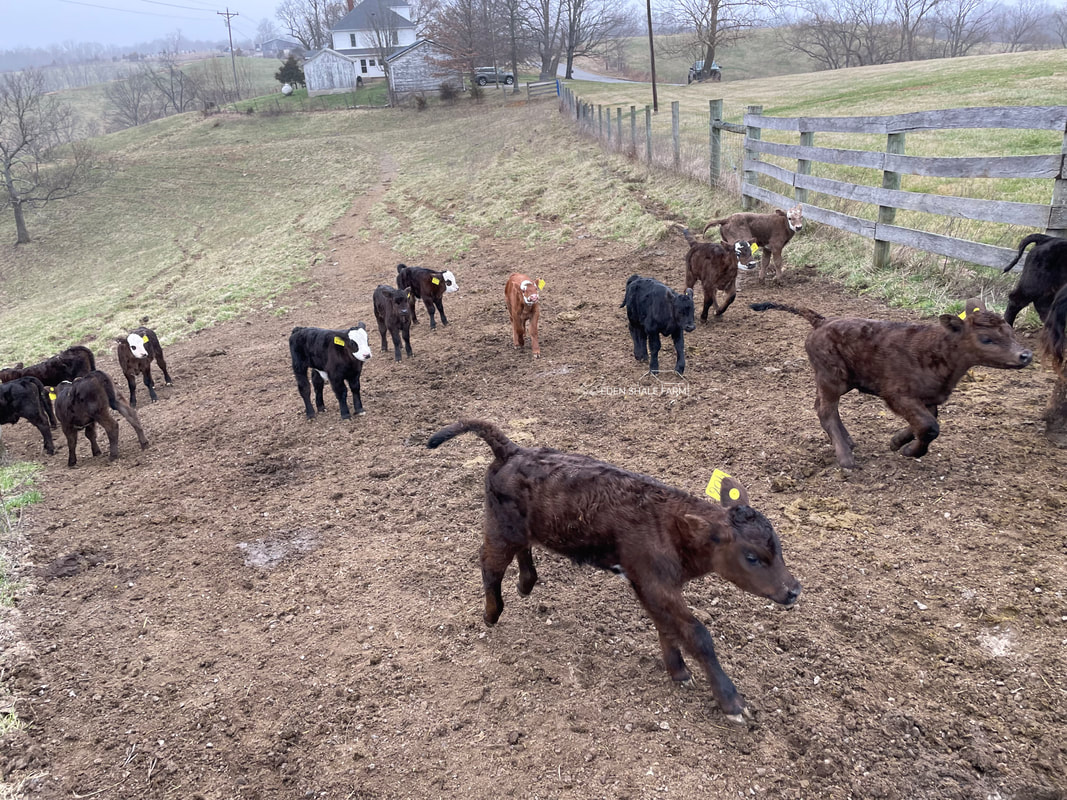
May tends to always be the busiest month of the year. It seems that no sooner the Derby is over and then so is the month. But May is busy in a good way, as the growing season is in full swing and the spring calves are running around on fresh pastures. I mentioned last month that our calving season went well. We had 96% of the calves born in 45 days, and the entire calve crop was born in 64 days giving us 98 calves on the ground and doing well. We have about 110 cows to AI this spring before being turned out with clean up bulls. This past month our local vet, Dr. Parker, came to the farm and pelvic measured our replacement heifers and performed a BSE on all our bulls. We had 1 heifer fail the pelvic measure (giving us 18 head to breed) and all the bulls passed the BSE. The replacement heifers will get AI bred on May 24th and the mature cows get AI bred on May 31st. We sold 35 head of last years calves this past month as well. These were heifers that we did not retain as replacements and the smaller end of the steers. The heifers weighed 573 lbs and brought $2.60. The steers sold in two cuts, one averaging 623 lbs at $2.95 and 706 lbs at $2.55. We still have 40 steers at the farm that are taking part in a mineral trial with USDA this summer and upon completion will be marketed in early August. We have also started our tours and events for the season. This month we hosted the UK Beginning Farmer/Rancher program which included a morning of presentations and a tour of the farm after lunch. We also hosted producers from multiple counties including Casey, Crittenden, Grant, and Pendleton. I would like to thank everyone who has taken the time to come visit Eden Shale Farm.
0 Comments
Calving season is hard work. It doesn’t have set hours, it doesn’t care about the weather, and sometimes the cows can just be plain mean about it. So, if a task is so cumbersome, why make it last forever? At Eden Shale Farm we have worked hard to condense our calving season to make it as short as possible. If you look back to 2014, our first calving season at the farm lasted 105 days and we only had 32% of the calves born in the first 45 days of the calving season. It was a long, tough season and I wondered why we decided to calve in the spring. 2015 was our first AI calf crop, and thus, we experienced some tightening of the calving window because of the synchronization protocol. That season we had 79% born in the first 45 days. We have continued to AI every year and have been working on condensing the calving window even further. We have also been pulling out the clean up bulls earlier to help eliminate the late season births. Those late calving cows typically won’t get AI bred and they tend to be tougher to breed back on time. We allow the cleanup bulls to stay with the cows for two heat cycles after AI, giving the cows three opportunities to get bred. If they don’t breed in three attempts, we cull them from the herd. In 2021 we got above 90% born in 45 days for the first time, and today we continue to make progress. The 2024 calf crop has been born in the tightest window yet. This year we achieved our all-time high of 96% born in the first 45 days of the calving season. The first 50% were born in 22 days. I do not expect to improve on these numbers, but instead it is my goal to keep at least 90% or more of the calves born in 45 days. Having all the calves born in such a tight window makes it easier to manage during calving. It also gives a lot of uniformity to the calf crop that follows them through to marketing. There are very few factors of the cattle business that you have complete control over. However, the length of your calving season is one of them. It is up to you to manage your herd in a manner that gives you every advantage that you possibly can.
|
Archives
June 2024
Categories
All
Welcome |



 RSS Feed
CONTACT US |
EMAIL SIGN UP |
|
Eden Shale Farm
245 Eden Shale Rd. Office: (859) 278-0899 Owenton, KY 40359 Fax: (859) 260-2060 © 2021 Kentucky Beef Network, LLC.. All rights reserved.
|

|
Receive our blog updates
|